On-line SPICE-SPIN+X Seminars
On-line Seminar: 21.01.2026 - 15:00 CET
Orbital-to-spin conversion in magnetic heterostructures
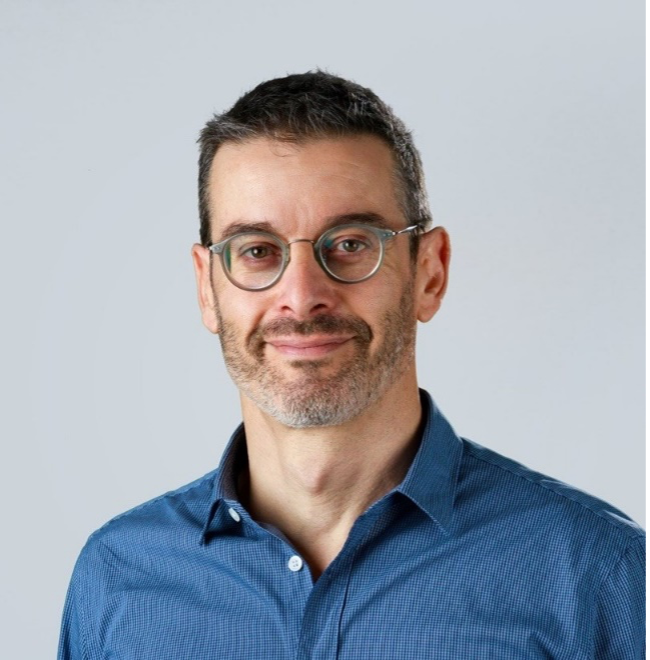
Pietro Gambardella, Department of Materials, ETH Zurich, Switzerland
Spin-orbital torques are central to spintronics, enabling current-induced magnetization switching, excitation of spin waves, and manipulation of noncollinear spin textures in nanoscale devices [1]. Besides the electron’s spin, recent investigations have pointed out the importance of the orbital degree of freedom in generating and transferring angular momentum from charge currents to spin systems. The generation and transport mechanisms of nonequilibrium orbital momenta are currently heavily debated. This talk will discuss the related issue of orbital-to-spin conversion, which is relevant for orbital transport, torques, and pumping phenomena. Experimental examples will include nonmagnetic/ferromagnetic bilayers [2,3], ferrimagnetic alloys [4] and garnets [5], and antiferromagnets [6].
References:
[1] Current-induced spin-orbit torques in ferromagnetic and antiferromagnetic systems, A. Manchon, J. Železný, I.M. Miron, T. Jungwirth, J. Sinova, A. Thiaville, K. Garello, and P. Gambardella, Rev. Mod. Phys. 91, 035004 (2019).
[2] Giant orbital Hall effect and orbital-to-spin conversion in 3d, 5d, and 4f metallic heterostructures, G. Sala and P. Gambardella, Phys. Rev. Res. 4, 033037 (2022).
[3] Mitigation of Gilbert damping in the CoFe/CuOx orbital torque system, S. Ding, H. Wang, W. Legrand, P. Noël, and P. Gambardella, Nano Lett. 24, 10251 (2024).
[4] Orbital Torque in Rare-Earth Transition-Metal Ferrimagnets, S. Ding, M.-G. Kang, W. Legrand, and P. Gambardella, Phys. Rev. Lett. 132, 236702 (2024).
[5] Orbital pumping in ferrimagnetic insulators, H.Wang, M.-G. Kang, D. Petrosyan, S. Ding, R. Schlitz, L.J. Riddiford, W. Legrand, and P. Gambardella, Phys. Rev. Lett. 134, 126701 (2025).
[6] Generation, transmission, and conversion of orbital torque by an antiferromagnetic insulator, S. Ding, P. Noël, G. K. Krishnaswamy, N. Davitti, G. Sala, M. Fantauzzi, A. Rossi, P. Gambardella, Nat. Comm. 16, 9239 (2025).
Please sign up here in order to get the Zoom link and regular announcements of the upcoming talks.
PDF file of the talk available here